Wednesday, 30 September 2015

David Fincher


- David Fincher was born August 28th 1962, he is an American Film Director, Film producer, Television Director and Music Video Director.
- Fincher has been nominated for: Academy Award for Best Director (The Curious Case of Benjamin Button 2008 and The Social Network 2010)
- Won: Golden Globe Award for Best Director and BAFTA Award for Best Direction He is also known for having directed the psychological thrillers Seven (1995), Fight Club (1999), the mystery thrillers Zodiac (2007) and The Girl with the Dragon Tattoo (2011) and Gone Girl (2014), as well as being pivotal in the creation of the critically acclaimed U.S. television series House of Cards.
- He was born in Denver, Colorado to a mental health nurse from South Dakota who worked in drug addiction programs, and Howard Kelly Fincher, an author from Oklahoma who worked as a reporter and a bureau chief for Life. From a young age Fincher knew that he wanted to go into Film Making.
- During high school he directed plays and designed sets and lighting after school. He was a non-union projectionist at a second-run movie theatre, production assistant at the local television news station KOBI in Medford, Oregon, and took on other odd jobs such as fry cook, busboy, and dishwasher. Fincher began his film making career at just eight years old with an 8mm camera.
- I love watching his movies, they all have an underlining suspense of thriller throughout them, although his films are not very graphic they are still eerie and stimulating. I think he is an extremely talented director and producer, his films are significant in his own terms and you can tell his films are his by his self-sufficient style.
My Weekly Media Consumption
 |
| This Pie Chart, documents my media consumption during a week, this included the use of Youtube, Television, Movies, Social Media and Music. |
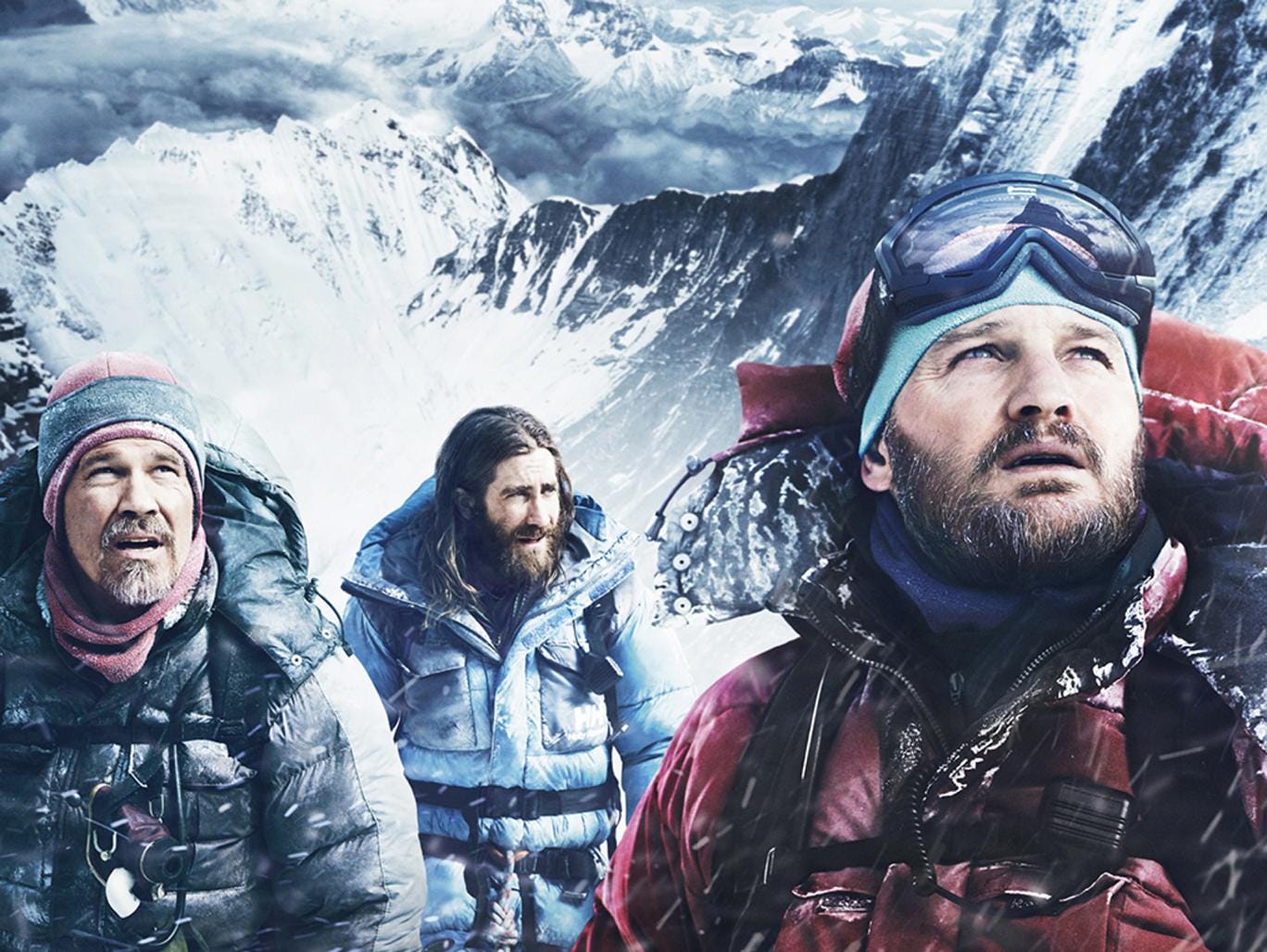
Everest IMAX Movie

Having seen Everest at the IMAX was a completely different experience. Firstly, the sound was something else and I could not just hear it but also feel it at the same time. It would literally vibrate the room and make the film feel so much more alive. This made certain scenes feel much more effective and surreal and was really enjoyable to watch.
Also due to the large screen we were watching the film on, it made me feel as if i was almost there. The screen was curved so you felt more involved and all the use of these different techniques made the film feel more alive.
I would definitely recommend to go see Everest as it was a thriller storyline and really good to watch. Make sure you see it at the IMAX as it was much more enjoyable :)
Saturday, 19 September 2015
Types of Shots/Sizes
Aerial Shot-Plan/shot sizes
Aerial Shot-Plan/ is an elevated perspective of an object from above, with a view as though the observer were a bird, often used in the making of blueprints, floor plans and maps.It can be an aerial photograph, but also a drawing.
Wide/Long Shot
Long shots are used to emphasise a sweeping location around the subject. Long shot and wide shot are interchangeable terms.
Full Shot (FS
A full shot displays the character from head to toe, without showing much of his surroundings (or else it would be considered a long shot). These shots were very popular in the beginning of cinema before filmmakers had understood the power of medium shots and close-ups.
A full shot distances the character from the viewer both physically and psychologically. They carry less emotional weight, and therefore they are not the best choice during emotional scenes.
Whenever the director wants to convey someone’s anger, fear, or joy, close-ups are way more effective. A full shot would be more appropriate during a character’s entrance or a foot pursuit, for instance.
Medium Shot (MS)
Medium shots are the most typical types of shots in the movies. Showing a lot of the subject’s body, medium shots are halfway between long shots and close-ups; however, authors do not agree on the definition. While some writers say that the medium shot shows the character from a little above the knees to the top of his head, others explain that medium shots usually go as low as a little above the waist. Also, composition guidelines suggest that frame lines shouldn’t cut the actors on the joints, so as long as operators avoid knees, waists, elbows, etc., the framing shouldn’t be a problem. Otherwise, just go a little higher or lower with the framing to avoid the joints.
The medium shot also includes two other famous shot types: The two-shot, with two actors facing the same screen direction, and the over-the-shoulder shot, showing a conversation in which the actors sit or stand across from each other.
Close-Up (CU)
In close-up shots, the subject occupies most of the frame, allowing very limited observation on the habitat. Close-ups are much more climactic than long or medium shots. They are favoured when previewing someone’s emotion.
Extreme Close-Up (ECU)
Usually known as a detail shot, extreme close-ups do exactly that: show a minor detail that would otherwise be not seen in a winder shot.
Introduction
Hi,
I'm Sophia Musmar and I have just started Media Studies for my AS Level. Throughout the year I will be updating my blog and documenting my experience of working towards creating my final project. This blog will involve me analysing television and film, and sharing my own personal favourites in the industry, I really enjoy every aspect in Media and I hope my blog will display that.I will be doing research and watching title sequences on youtube to give me some sort of direction of what is expected. Also different genres of films will show different types of conventions, so the sequences will be represented in other ways, I will see how this is done by observing contrasting openings.
Please comment, subscribe and feel free to leave any comments.
Enjoy!
Sophia
I'm Sophia Musmar and I have just started Media Studies for my AS Level. Throughout the year I will be updating my blog and documenting my experience of working towards creating my final project. This blog will involve me analysing television and film, and sharing my own personal favourites in the industry, I really enjoy every aspect in Media and I hope my blog will display that.I will be doing research and watching title sequences on youtube to give me some sort of direction of what is expected. Also different genres of films will show different types of conventions, so the sequences will be represented in other ways, I will see how this is done by observing contrasting openings.
Please comment, subscribe and feel free to leave any comments.
Enjoy!
Sophia
Subscribe to:
Comments (Atom)